
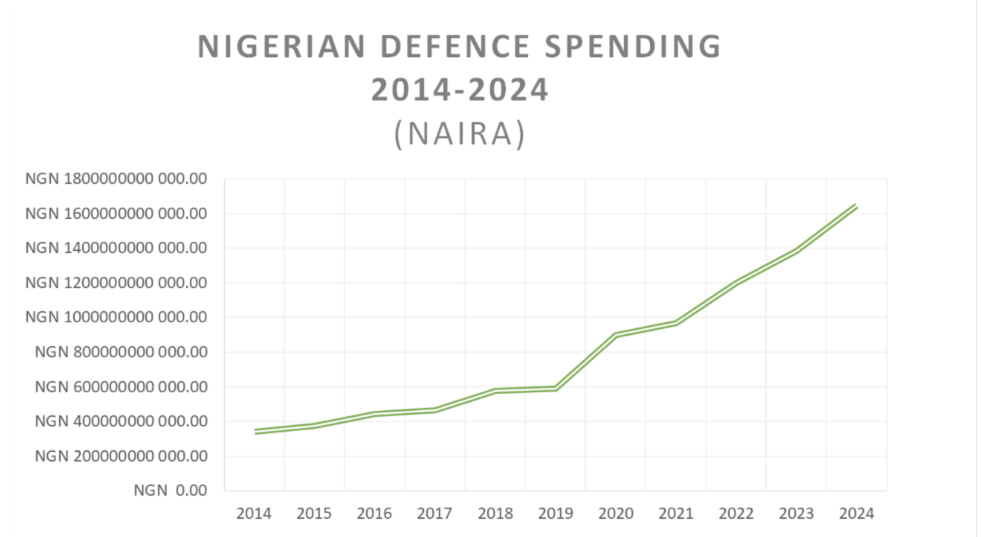
Nigeria has allocated about N32.8 trillion to defence over the past 15 years, highlighting the country’s significant financial commitment to addressing insecurity across multiple regions.
Data drawn from federal budget records shows that the cumulative defence spending represents roughly 12.5 percent of Nigeria’s total national budgets within the period, which amounted to about N262.8 trillion.
Despite the large investment in security, the country continues to grapple with persistent threats including insurgency in the North-East, banditry in the North-West, kidnappings, and communal violence in different parts of the country.
Defence Spending Over the Years
Successive Nigerian governments have steadily increased defence allocations in an effort to strengthen the country’s security architecture and support military operations nationwide.
The funds typically cover military operations, personnel salaries, equipment procurement, logistics, and infrastructure for the armed forces and other security agencies.
However, the scale of spending has not fully translated into a lasting improvement in security conditions, prompting renewed debate about how defence funds are managed and deployed.
Security Challenges Persist
Nigeria has faced multiple security crises over the past decade, including the long-running Boko Haram insurgency, widespread bandit attacks in several northern states, and growing incidents of kidnapping and communal clashes.
Security trackers estimate that over 100,000 people have died in violence linked to insecurity since 2012, while millions have been displaced from their homes.
These developments have fueled public concern over whether the resources allocated to the defence sector are being used effectively.
Calls for Transparency and Reform
The scale of defence spending has intensified calls from lawmakers, analysts, and civil society groups for greater transparency and accountability in the management of security funds.
Experts argue that addressing Nigeria’s complex security problems requires not only military spending but also better intelligence coordination, improved policing, and stronger governance structures.
As discussions continue around the country’s security strategy, the debate over the efficiency of defence spending is expected to remain a key issue in Nigeria’s policy and political landscape.