
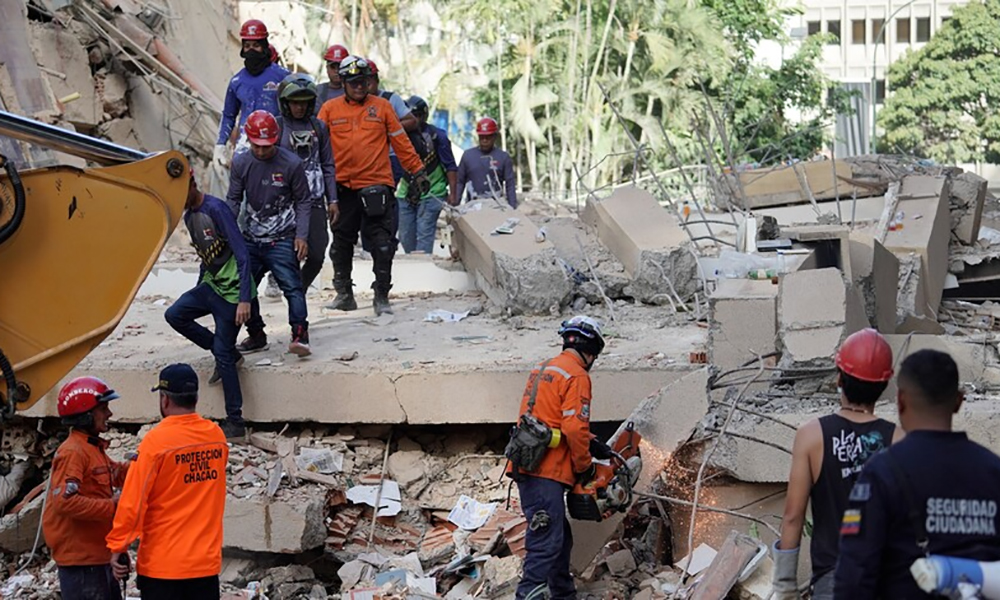
The death toll from the devastating earthquakes that struck Venezuela has risen to 188, according to official reports, as emergency responders continue intensive search, rescue, and relief operations across the country’s worst-affected regions.
The powerful seismic events caused widespread destruction, leaving buildings collapsed, critical infrastructure damaged, and thousands of residents displaced. Rescue teams remain on the ground, working around the clock to locate survivors trapped beneath rubble while providing emergency assistance to affected communities.
Authorities have warned that the casualty figure could increase as search operations continue in areas that remain difficult to access. Emergency personnel are using heavy equipment alongside trained rescue teams to clear debris and reach locations where victims may still be trapped.
The earthquakes severely impacted transportation networks, electricity supply, telecommunications, and water infrastructure, creating significant challenges for humanitarian response efforts. Damaged roads and collapsed structures have slowed the delivery of relief materials to some of the hardest-hit communities.
Government agencies are coordinating with local emergency services and humanitarian organizations to provide temporary shelter, food, clean water, medical care, and other essential supplies to displaced families. Officials have urged residents in affected areas to remain vigilant as authorities continue to assess damaged buildings and monitor the possibility of aftershocks.
Hospitals and healthcare facilities have been placed under pressure as medical teams treat survivors suffering from injuries sustained during the earthquakes. Emergency medical personnel continue to provide urgent care while supporting families affected by the disaster.
Communities across Venezuela have begun mobilizing support for victims, with volunteers assisting rescue workers and distributing relief materials to those in need. Local organizations and community leaders are also helping coordinate assistance for displaced residents whose homes were destroyed or declared unsafe.
Experts note that strong earthquakes can trigger secondary hazards, including landslides and structural collapses, making rescue operations particularly dangerous for emergency personnel. Authorities have therefore continued to restrict access to heavily damaged areas until engineers complete safety assessments.
The government has pledged to continue supporting affected communities while accelerating recovery and reconstruction efforts once emergency operations are completed. Damage assessment teams have been deployed to determine the full extent of losses and identify priority areas for rebuilding.
The tragedy has prompted an outpouring of sympathy from both within Venezuela and the international community, with humanitarian agencies closely monitoring developments and expressing readiness to support ongoing relief efforts where necessary.
As rescue operations continue, officials remain focused on saving lives, assisting displaced families, and restoring essential services to affected communities. While the rising death toll underscores the scale of the disaster, emergency responders continue working tirelessly in the hope of finding additional survivors and helping communities begin the long process of recovery.